Stone furniture can give an outdoor space a cool, grounded feel, from a rough-hewn garden bench to a smooth dining table. But is stone furniture suitable for outdoor use? Often, yes—if the stone, finish, and construction match the local climate and intended setting. Granite generally handles weather well, while marble and limestone may stain, etch, or weather more visibly. No stone is maintenance-free. It can chip. Freeze-thaw cycles, standing water, and harsh cleaners can also affect surfaces or joints over time.
This guide explores ten stone furniture picks and the practical details that matter before you buy. It considers material, weight, comfort, stability, upkeep, and placement, rather than judging pieces by appearance alone. A heavy table may sit securely on a patio, yet be difficult to move or install. A porous stone bench may look beautiful under a tree, but fallen leaves and damp shade can leave marks. Those small realities matter. The recommendations are general guidance, not a guarantee that every piece will suit every climate; check the maker’s care instructions and construction details. We also acknowledge a less tidy truth: even a carefully chosen stone piece may need seasonal cleaning, protective pads, or occasional professional care. The goal is to help you compare options honestly and decide whether stone furniture fits your outdoor space, routine, and tolerance for natural wear.
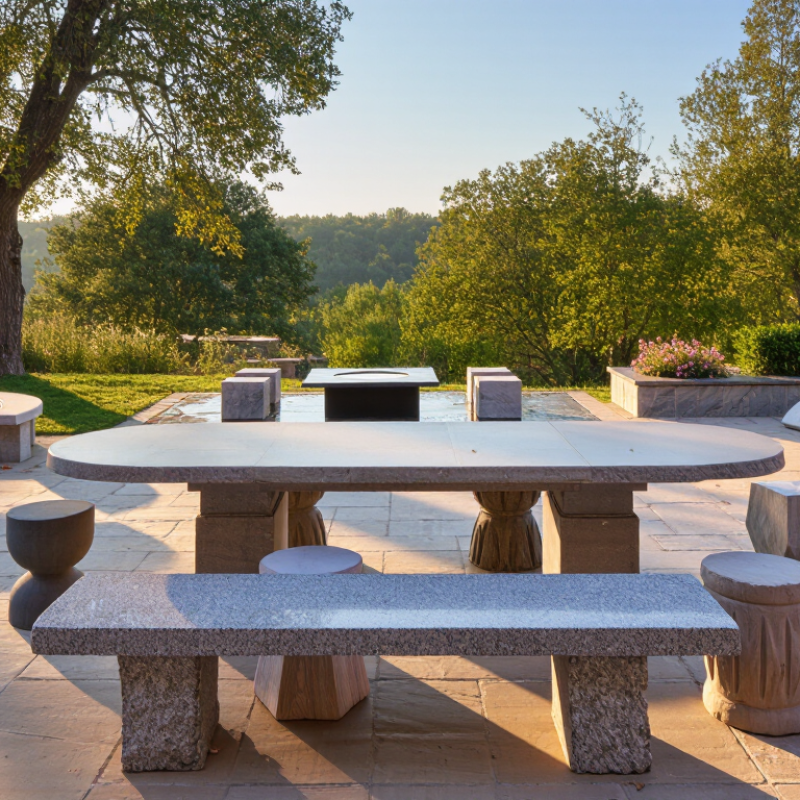
Stone furniture is made from natural rock, such as granite, marble, limestone, or slate, and sometimes from engineered stone. Each material has its own grain, weight, and response to weather. Stone is not uniform. A pale limestone slab may feel smooth but absorb more water than dense granite. That difference matters outdoors, where rain, sun, and freeze-thaw cycles can affect surfaces over time.
Making a stone table or bench starts with selecting a block or slab and checking it for cracks, weak veins, and uneven coloring. The stone is cut to size with specialized saws, then shaped and finished by hand or machine. Edges may be eased to prevent sharp corners, while surfaces can be polished, honed, or textured for grip. Details matter. Builders may join pieces with concealed supports or metal hardware, but the design must account for stone’s considerable weight. A small chip can change the whole look. Some pieces receive a breathable sealer to reduce staining, though sealing does not make every stone waterproof. Engineered stone contains mineral material and binders, so its outdoor performance depends on its composition. Choosing a finish and support system for the actual climate takes care; I would not assume every stone piece is patio-ready.
Stone furniture can work outdoors, but “stone” is not one uniform material. Dense granite often absorbs little water, while some limestone and marble varieties are more porous and may stain or weather faster. The Natural Stone Institute’s Dimension Stone Design Manual recommends judging each stone by tested properties, not appearance alone. ASTM C97/C97M measures water absorption, and ASTM C880/C880M measures flexural strength. Ask for results for the actual stone type and finish. Small differences matter.
Rain is only part of the test. Water trapped beneath a tabletop can freeze, expand, and stress weak points; hot sun can also warm a dark slab enough to make seating uncomfortable. Look for a slight tabletop slope, open drainage paths, and corrosion-resistant hardware. Details count. On a patio, a heavy stone bench may stay steady in wind, yet still rock on uneven pavers. That is easy to miss in a showroom. Sealer can reduce staining, but it does not make stone waterproof or prevent every weather-related change. Check the supplier’s care guidance and inspect joints after the first wet season. I would not assume a polished surface is automatically the safest choice outdoors; when damp, some finishes can become slippery.
| Rank | Furniture Pick | Stone Type | Outdoor Performance | Care and Weather Considerations | Best Use |
|---|---|---|---|---|---|
| 1 | Dining table | Granite | Generally a strong outdoor choice. Many granite varieties are dense and resist routine weathering, though properties vary by stone. | Choose a suitable exterior-grade slab and a stable base. Clean with a mild, stone-safe cleaner; sealing may be recommended depending on the stone and finish. | Patios and outdoor dining areas, including climates with seasonal temperature changes when the stone is properly selected. |
| 2 | Garden bench | Basalt | Dense basalt can perform well outdoors and has a naturally hard surface. Actual durability depends on the specific material and fabrication. | Use a level, well-drained installation. Check the stone and finish for suitability in freeze-thaw conditions before purchase. | Garden paths, courtyards, and other permanent seating areas. |
| 3 | Coffee table | Quartzite | Natural quartzite is typically hard and suitable for exterior applications when the specific slab is properly identified and tested. | Ask whether the stone is true quartzite, as visually similar stones can have different properties. Use a stable support and avoid harsh cleaners. | Covered or open-air seating areas where a durable tabletop is needed. |
| 4 | Side table | Soapstone | Its low porosity can make soapstone relatively resistant to water staining, but it is softer than many other furniture stones and can scratch or dent. | Expect surface marks to develop with use. Confirm local climate suitability and keep the table on a secure, even base. | Covered patios and sheltered outdoor lounges where occasional surface wear is acceptable. |
| 5 | Dining or serving table | Slate | Exterior-grade slate can work well outdoors, but its performance varies. Some slate can split or flake along its natural layers. | Select sound, outdoor-rated material and inspect edges and surfaces. Sealing needs depend on the slate and its finish. | Covered dining spaces and patios where a textured, natural finish is desired. |
| 6 | Patio dining table | Travertine | Travertine is used outdoors, but its pores and natural voids make water absorption and weather exposure important considerations. | Choose exterior-grade stone, with an appropriate filled or unfilled finish for the setting. Sealing can reduce staining, but does not make the stone maintenance-free. | Warm-climate patios and covered outdoor dining areas with regular care. |
| 7 | Bench or low table | Limestone | Limestone can be used outdoors, but it is generally more vulnerable to acid, abrasion, and weathering than harder, denser stones. | Avoid acidic cleaners and protect the surface from acidic spills. Select a variety intended for exterior use, especially in wet or freezing climates. | Sheltered gardens and patios where a softer, matte appearance is preferred. |
| 8 | Park-style bench | Cast concrete | Concrete is widely used for outdoor seating and can be durable, but it may crack, absorb water, or be affected by freeze-thaw cycles. | Use a mix and design intended for exterior exposure, with suitable drainage and joints. A compatible sealer may help reduce water penetration and staining. | Public or residential gardens, courtyards, and permanent outdoor seating. |
| 9 | Accent table | Exterior-rated cement-based terrazzo | Can perform outdoors when both the binder and aggregate are specified for exterior exposure. Not all terrazzo products are suitable for outdoor use. | Confirm exterior and UV suitability with the fabricator. Resin-based terrazzo may have different outdoor limitations from cement-based terrazzo. | Contemporary patios and covered terraces, subject to the product specification. |
| 10 | Decorative side table | Marble | Marble can be used outdoors, but it is more susceptible to etching from acids and surface weathering than many harder stones. | Use a variety rated for the local climate and expect patina over time. Clean spills promptly; sealing can help with staining but does not prevent acid etching. | Sheltered patios and decorative outdoor settings where a changing natural finish is acceptable. |
Stone furniture can suit patios and gardens, especially where a sturdy, lasting surface is useful. Dense stone resists scratches and will not rust or warp like some materials. Its weight also helps tables stay steady in strong breezes. That matters. But moving a stone bench or table can be difficult, and some patios may need extra support.
Stone has drawbacks in daily use. Dark surfaces can become hot under direct summer sun, while pale stone may show spills or grime. Porous varieties can absorb water and stain; repeated freezing and thawing may also cause damage. Care depends on the stone. Acidic cleaners can etch calcium-rich materials such as marble, so check care guidance before cleaning.
Tips: Choose a dense stone suited to your local weather, and ask whether sealing is recommended. Place furniture on a level, stable surface. Test a sample in the sun before choosing a finish. Leave room for drainage, and use protective pads beneath the legs to reduce scratches. These steps help, though they do not make stone maintenance-free.
Stone furniture is durable and weather-resistant, but its weight can make it difficult to move. This chart compares representative densities; actual values vary by stone type and source. Density alone does not determine outdoor suitability—porosity, finish, climate, and maintenance also matter.
Choosing stone furniture for an outdoor space starts with climate, ground conditions, and daily use—not appearance alone. Granite and dense limestone generally handle weather better than porous stone, but every stone varies. Check the supplier’s absorption and freeze-thaw test data, and ask how the surface should be maintained. Heavy pieces feel stable, yet they can be difficult to move across a deck. Measure access routes before ordering. A tight gate can turn a perfect table into a problem.
Consider sun and drainage, too. The U.S. Environmental Protection Agency reports that urban areas can be 1–7°F warmer than nearby rural areas by day. A shaded seat may feel more comfortable, while a pale, textured finish can reduce glare. Place furniture on a level, load-rated surface, and leave space for water to drain beneath it. In freeze-prone regions, trapped moisture matters. I would not assume “natural stone” means maintenance-free; that assumption is easy to regret.
Tips: Use NOAA’s 1991–2020 Climate Normals to check local temperature and precipitation patterns. Ask for care instructions in writing. Test a finish with a wet hand if you can; polished stone may become slippery. And leave room for cushions, planters, and actual people. The layout often looks larger on paper.
For outdoor use, dense stone can provide stable seating and tables, especially on firm, level paving. Granite and basalt are generally practical choices, while porous limestone may need more careful sealing and upkeep. Weight matters. Check that the patio can support each piece, and leave room for safe movement around heavy furniture.
Ten useful picks include:
Choose rounded edges where people pass often. A broad bench can hold damp cushions, so removable pads are easier to dry.
Inspect stone for cracks and ask how it was finished before buying. Sealer can reduce staining, but it does not make every surface stainproof. Keep furniture slightly raised where possible, and clear leaves from joints after rain. In freezing climates, avoid water sitting in porous stone. I have seen a pale stone top look elegant in a showroom, then show muddy rings after one wet weekend; shade and a simple cleaning routine matter more than expected.
Yes, if the stone suits your local weather. Dense varieties often absorb less water, but performance varies.
Ask for test results for the exact stone and finish. Water trapped under a tabletop can freeze and stress weak areas.
No. Sealer may reduce stains, but it cannot prevent every weather-related change.
Yes. A dark slab in direct sun can get hot. Test a sample outside first.
Not necessarily. It may resist wind but still rock on uneven patio pavers. Check the surface beneath it.
Look for drainage paths, a slight tabletop slope, and corrosion-resistant hardware. Small details matter.
Follow the care guidance for that stone. Acidic cleaners can etch some calcium-rich surfaces, including certain marble.
Not always. Some polished finishes can become slippery when damp. I would check the finish in real conditions, not just a showroom.
Stone furniture is crafted by cutting, shaping, and finishing natural or engineered stone into pieces such as tables, benches, and stools. To decide whether is stone furniture suitable for outdoor use, consider the stone type, construction, and local weather. Many stone pieces handle sun, rain, and everyday wear well, but porous materials may absorb moisture or stain, and freeze-thaw cycles can cause damage. Stone is also heavy, which can make furniture stable in wind but difficult to move.
Outdoor stone furniture offers durability, a distinctive natural look, and relatively low day-to-day maintenance. Its drawbacks may include weight, cost, hard surfaces, and the need for occasional sealing or careful cleaning. When choosing pieces, assess the space, climate, intended use, finish, drainage, and maintenance needs. A top 10 selection might include dining tables, coffee tables, benches, side tables, stools, garden seats, console tables, fire-pit seating, sculptural chairs, and compact accent pieces. Compare each option for comfort, stability, weather resistance, and fit before making a choice.

Tranquix Stone