Stone furniture can make a garden feel grounded and calm, but stone is not weatherproof. Rain can seep into porous surfaces, while freeze-thaw cycles may widen tiny cracks. Strong sunlight can fade some finishes, and damp leaves can leave stains on a tabletop. The damage often appears slowly. By the time a surface looks rough, moisture may already have settled into it.
Knowing how to protect stone furniture from weather damage starts with identifying the stone and its finish. Granite, marble, limestone, and cast stone do not respond to water or cleaning products in exactly the same way. Check the maker’s care instructions before applying a sealer; a product meant for one surface may discolor another. Simple habits help: wipe standing water after storms, lift pots with small risers, and clear debris from joints. Use a breathable cover when prolonged rain or winter conditions are expected, but let the furniture dry before covering it. Airflow matters.
This 2026 guide explores practical ways to clean, seal, cover, and store stone furniture through changing seasons. It also explains what to inspect, including hairline cracks, loose joints, and patches that stay damp after the rest has dried. Some marks are harmless; others deserve closer attention. Weather varies, and no single routine suits every stone or climate. Even careful owners miss a spot sometimes. The useful goal is not perfect prevention, but earlier, better-informed care.
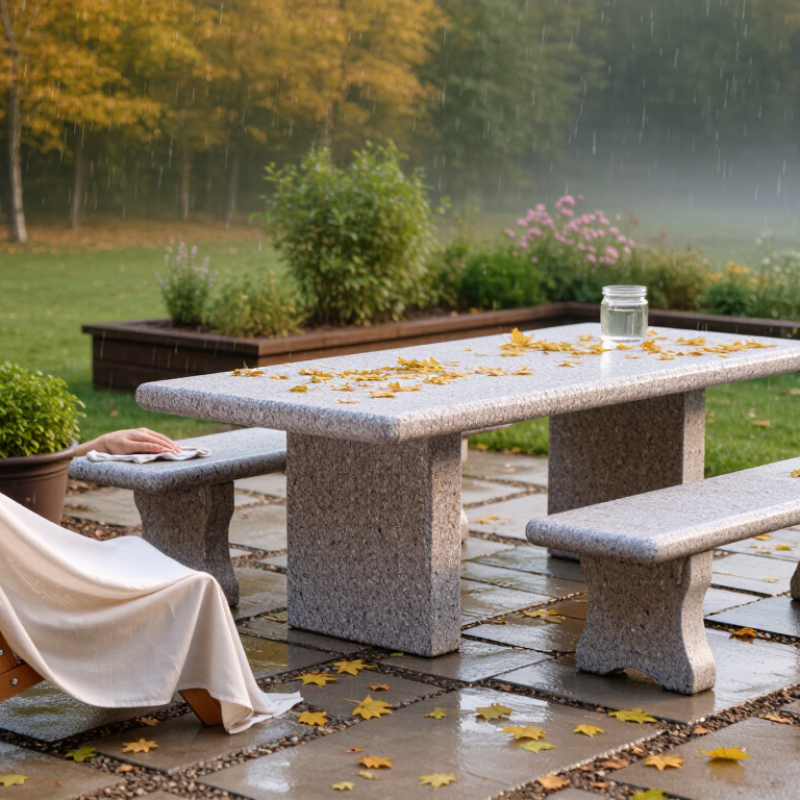
Identify the stone before choosing an outdoor treatment. Granite, marble, and limestone can absorb water at very different rates. Ask a qualified stone laboratory to test a representative sample under ASTM C97/C97M, which measures water absorption by weight. Record the result as a percentage, along with the stone name, finish, and sample location. Test the actual stone. A supplier’s description alone may not identify a particular slab’s performance.
Compare lab results with the relevant product specification, not with a guess. ASTM C615/C615M sets a 0.40% maximum absorption requirement for granite; ASTM C503/C503M sets 0.20% for marble. These are specification limits, not guaranteed readings for every piece. Lower absorption generally means less water enters the stone, but it does not make furniture immune to rain, freezing, or stains.
Small number. Big consequence.
In practice, note whether water darkens a test offcut and how long the mark remains. That check is useful, but imperfect; surface finish and prior treatment can affect the result. Keep the lab report with care records, and repeat testing if the stone source changes.
Stone furniture can look solid yet fail at a thin edge. Before choosing a slab for an exposed bench or table, ask a qualified laboratory to assess flexural strength using ASTM C880. This test measures how dimension stone resists bending under specified conditions. Results should identify the stone type, specimen orientation, and test condition. Ask whether samples reflect the actual slab’s thickness and finish. A number without context is not much help.
C880 does not measure freeze–thaw durability. Local exposure matters: repeated freezing after rain, shaded damp corners, and water trapped beneath a tabletop can stress stone differently. Compare the lab result with the site’s seasonal conditions, and seek relevant freeze–thaw testing where available. Also review water absorption and inspect for existing cracks or weak veins. No test perfectly reproduces a garden’s weather. That limitation deserves attention, not a footnote.
Tips: Elevate furniture on stable feet, keep joints draining, and clear standing water before freezing nights. Check edges each spring. I would not assume a high flexural result makes every stone suitable outdoors; that is an easy mistake.
Outdoor stone furniture can withstand years of use, but water trapped around its base encourages staining, algae, and damage during freeze-thaw cycles. Shape the surrounding paving to fall outward at a 2% slope: a drop of 2 centimeters for every meter. That matters. Rain should move away from the furniture, not collect beneath a bench or around a table pedestal.
Keep the furniture’s contact points stable and level; don’t tilt a dining table just to drain its surface. Instead, grade the surrounding stone or paving, and make sure runoff has a clear route rather than ending at a wall or raised edge. A straightedge and level can help check the fall during installation. After the first heavy rain, look for shallow puddles. A slope can measure correctly and still drain poorly if joints dip or an outlet is blocked. I’d recheck it after settling, too; stonework does not always behave as neatly as the plan suggests. Keep drains and joints clear of leaves, grit, and soil so water can escape.
Outdoor stone furniture faces more than rain. Wind-driven grit can scratch a damp surface, while trapped moisture may worsen damage during freezing weather. Choose a breathable sealer with published test data, not just a promise that water will bead. Look for water-repellency results and vapor-transmission information, ideally measured on stone similar to yours. Beads look reassuring, but they do not prove that the stone can release moisture.
Check how the sealer was tested, how many coats were applied, and when the surface can get wet again. Recoat guidance should reflect exposure, not a vague “every few years” claim. A shaded bench and a sun-baked patio table may age differently. Test a small, hidden area first; stone color and texture can change. I would not assume a clear finish stays invisible forever. That is easy to overlook.
Tips: Clean off dust and let the stone dry fully before sealing. Apply a thin, even coat, then wipe away excess if the directions call for it. Keep a note of the application date and inspect after heavy rain. Recoat when water absorption increases, not merely because the calendar says so.
How to Protect Stone Furniture from Weather Damage in 2026
Inspect stone furniture at the start of each season, especially after heavy rain or a freeze. Check joints, undersides, and carved edges for hairline cracks. A dry paper towel pressed against a suspicious spot can reveal lingering moisture. Look for pale rings, gritty crusts, or white salt deposits; brushing them away while dry is safer than soaking the surface. Salt can crystallize inside pores as water evaporates, gradually loosening mineral grains. ASTM C97/C97M measures dimension stone’s water absorption as a percentage of dry weight. Ask for the stone’s test result when available: higher absorption can signal greater moisture sensitivity, though stone type and finish also matter.
After wet weather, inspect legs and contact points for darkened patches or dampness that persists. Record changes with dated photos; small cracks are easier to compare when the light and angle match. NOAA’s 1991–2020 Climate Normals provide local temperature and precipitation records, useful for identifying periods when repeated wetting or freezing deserves closer attention. Wipe salt deposits with a soft, dry brush first, then follow care guidance specific to the stone. Avoid harsh acids, which can etch many calcium-based stones. I would not assume every white mark is salt; mineral deposits and cleaner residue can look similar. If a crack grows or moisture remains trapped, get a stone-care professional to assess it before applying a sealer. Sealers do not repair damage.
| Season | Inspection Focus | Warning Signs | Recommended Care |
|---|---|---|---|
| Spring After freezing weather has passed |
Check tops, edges, joints, feet, and areas that held snow or standing water. | New or widened cracks, flaking, loose joints, dark damp patches, or white powdery deposits. | Remove loose dirt with a soft brush and clean with water and a stone-compatible, pH-neutral cleaner. Let the furniture dry fully before applying any suitable protective treatment. |
| Summer During hot, sunny periods |
Inspect surfaces exposed to intense sun, heat, irrigation spray, and frequent outdoor use. | Surface discoloration, persistent dampness, mineral spots, or cracks around joints and attachments. | Move pieces away from sprinkler overspray where possible. Use shade or a breathable cover for protection, and avoid placing hot items directly on the stone. |
| Autumn Before temperatures fall |
Look for hairline cracks, open seams, blocked drainage paths, and areas where leaves trap moisture. | Water collecting on the surface, debris packed into joints, loose components, or salt residue from nearby roads or de-icing products. | Clear debris and make sure water can drain away. Rinse salt deposits promptly with clean water, then allow the stone to dry. Do not use acidic cleaners on calcium-based stone such as marble or limestone. |
| Winter During freezing and thawing |
Check for standing water, ice buildup, and changes in existing cracks after freeze–thaw cycles. | Cracks that appear wider, chipped edges, surface scaling, or water repeatedly freezing in joints. | Keep drainage areas clear and avoid striking ice with metal tools. If practical, move smaller pieces to a sheltered, dry location; otherwise use a secure, breathable cover that does not trap moisture. |
| After storms or salt exposure As needed |
Inspect soon after heavy rain, flooding, snow, or contact with de-icing salts. | White crystalline deposits, muddy residue, prolonged wet areas, or fresh chips and cracks. | Remove deposits with a soft brush and clean water; repeat gentle rinsing if needed. Avoid wire brushes, pressure washing, and unapproved chemicals that can damage the stone or its finish. |
It measures how stone resists bending under specified conditions. It can help assess a thin bench edge or tabletop, but it cannot predict every failure.
Ask for the stone type, specimen orientation, and test conditions. Confirm that sample thickness and finish resemble the actual slab. Otherwise, the number may be hard to apply.
No. Flexural testing does not measure freeze–thaw durability. Repeated freezing after rain or water trapped beneath a tabletop creates different stresses.
Compare test results with local seasonal exposure. Review water absorption and inspect for cracks or weak veins. No test perfectly copies a garden’s weather.
Elevate pieces on stable feet and keep joints draining. Clear standing water before freezing nights. Check the edges each spring.
Look for tested water-repellency and vapor-transmission data for similar stone. Check application conditions, coat count, drying time, and recoat guidance.
Not necessarily. Beads look reassuring, but they do not show whether moisture can escape through the stone. I might be overcautious here.
Test a hidden patch first; color or texture may change. Clean and dry the stone, then apply an even coat as directed. Record the date and inspect after heavy rain. Recoat when absorption increases, not just by calendar.
To understand how to protect stone furniture from weather damage, first identify the stone type and record its water absorption using ASTM C97/C97M. This helps assess how readily moisture may enter the material and informs decisions about its placement and protection. Flexural strength can be evaluated using ASTM C880, with local freeze–thaw exposure considered when judging whether the furniture is suitable for outdoor conditions.
Good drainage is essential: provide an outward slope of about 2% so water does not collect on surfaces. If a sealer is appropriate for the stone, choose a breathable product based on tested water-repellency results and clear recoat guidance. Inspect the furniture each season for cracks, persistent moisture, and salt deposits. Addressing these signs early can help limit deterioration and keep stone furniture in better condition over time.

Tranquix Stone