 Tranquix Stone
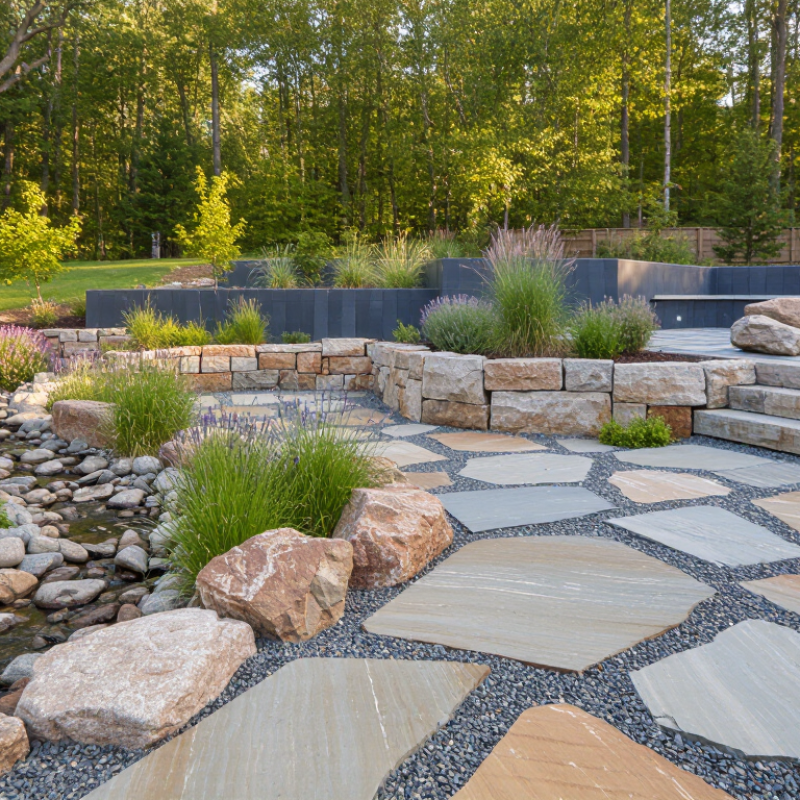
Stone landscaping is moving toward natural textures, regional materials, and quieter outdoor spaces. The market is expanding steadily.
Grand View Research forecasts a 4.6% compound annual growth rate for the global natural stone market through 2030. This outlook reflects demand from residential gardens, hospitality projects, and urban public spaces. Stone remains attractive because it offers durability, thermal stability, and visual variation that manufactured surfaces often imitate.
Natural stone also supports more site-specific design. A split limestone path can follow a garden’s existing slope. Rough granite edges can frame rain gardens and reduce hard visual lines. Designers increasingly combine stone with native planting, permeable joints, and recycled aggregates. These choices can improve drainage and reduce replacement needs.
The details matter.
The U.S. Geological Survey’s Mineral Commodity Summaries highlights ongoing construction demand for crushed stone and other mineral materials. However, natural stone extraction still carries transport and resource costs. A local supplier may reduce hauling emissions, but availability and quality can vary sharply. That is where practical experience matters. A sample may look perfect indoors, yet become slippery outdoors. Shade can also change its color.
The 2025 trend is not simply “more stone.” It is better selection, tighter installation, and longer service life. Still, sustainability claims need verification. Product origin, quarry practices, maintenance requirements, and life-cycle data should be checked before specifying materials.
