Stone surfaces bring natural character to kitchens, bathrooms, patios, and commercial spaces. Their veining looks unique, but their pores can absorb coffee, oil, wine, soap, and muddy water. Understanding how to prevent stains on stone surfaces helps preserve that original appearance without relying on harsh cleaning methods.
Daily habits make a measurable difference. Wipe spills promptly with a soft, absorbent cloth, especially around sinks and cooking areas. Avoid dragging metal cans or gritty containers across polished stone. Use pH-neutral cleaners recommended for the specific material, because acidic products may dull marble, limestone, or travertine. Granite often tolerates more products, but it still benefits from careful maintenance. Small details matter.
Sealing provides another layer of protection, although it is not a permanent shield. A qualified stone-care professional can identify the stone, assess its porosity, and recommend a compatible sealer. Always test products on a hidden section first. A sealed countertop may still stain when spills sit overnight. I have seen owners blame the stone when the real problem was an unsuitable cleaner or missed maintenance. That mistake is easy to repeat. Regular inspections, clean mats, coasters, and quick responses can reduce everyday risks. This guide explains practical prevention methods, common mistakes, and sensible care routines for different stone surfaces. The goal is not to make stone maintenance complicated. It is to protect the material’s texture, color, and long-term value through informed, realistic choices.
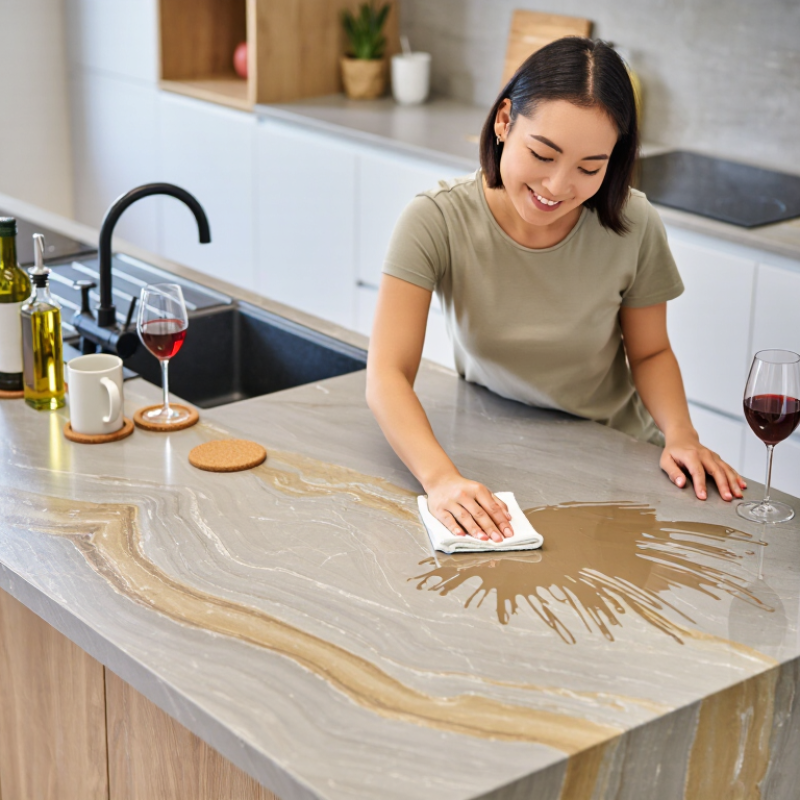
Stone surfaces become stained because they are not completely solid or nonporous. Natural pores and tiny fissures can absorb coffee, cooking oil, wine, and colored cosmetics. Limestone and marble usually absorb liquids faster than dense granite. A polished finish may slow absorption, but it does not make stone stain-proof. The longer a spill remains, the deeper its color can travel.
Moisture creates another problem. Water entering through grout lines or an unsealed edge may carry rust, soil, or dissolved minerals into the stone. This can produce orange marks, dark patches, or a cloudy surface. Improper cleaners also leave residue. Acidic products may dull calcium-based stone, while oily soaps can build a sticky film that attracts dust. I have seen fresh stains blamed on the stone when the real cause was trapped moisture beneath a container.
Prevention starts with observing how the surface is used. Wipe spills quickly, especially near sinks and dining areas. Use clean, absorbent cloths instead of spreading liquid with a wet towel. Place coasters under drinks and trays beneath bottles or plant pots. A suitable penetrating sealer can reduce absorption, but it requires periodic review. Sealing is not permanent. Test a hidden area before applying any cleaner, because even careful maintenance can produce uneven results on older stone. Inspect edges, grout, and shaded corners regularly. Those quiet areas often reveal the problem first.
How to Prevent Stains on Stone Surfaces?
Selecting the right sealant starts with identifying the stone, not choosing the strongest product. Granite is usually dense, so a penetrating impregnating sealer often offers practical stain resistance without changing its appearance. Marble, limestone, and travertine need breathable penetrating sealers. These stones absorb oils easily, but sealers cannot prevent acid etching from lemon juice or vinegar.
Slate varies widely in porosity. Test a hidden area with a few drops of water before sealing. If the surface darkens quickly, it likely needs deeper protection. Concrete-based stone may require a penetrating sealer for a natural finish or a compatible topical sealer for stronger surface protection. Engineered quartz is generally nonporous and usually does not need sealing. Always follow the surface manufacturer’s care instructions.
Preparation matters as much as the sealant. Remove dust and grease, then allow the stone to dry completely. Apply a thin, even coat, and wipe away excess before it becomes sticky. A small test patch can reveal unwanted darkening or gloss. It is easy to over-seal. More product does not always mean more protection. Recheck high-use areas near sinks, cooktops, and entryways every year. Water beading can suggest remaining protection, but it is not a perfect test. Even careful selection can fail when moisture remains trapped beneath the surface.
How to Prevent Stains on Stone Surfaces?
Preparing the Surface Before Applying Protective Treatments
A protective treatment cannot fix a dirty or damp stone surface. Preparation determines how evenly the product bonds and performs. Remove dust, grease, old wax, and construction residue with a stone-safe cleaner. Avoid harsh acids, especially on limestone, marble, and other calcium-based stones. They can dull the finish or enlarge tiny pores.
In field work, I have seen stains appear beneath sealers because moisture remained inside the stone. Allow the surface to dry completely, then check darker areas carefully. A moisture meter can help, but visual inspection still matters. Repair cracks, open joints, and loose grout before treatment. Test the cleaner and protective product on a hidden section first. The result may differ between polished, honed, and textured finishes. I once underestimated grout residue; it later made the treated surface look patchy.
Tips: Sweep before wet cleaning. Use clean water for rinsing. Change cloudy rinse water often. Let the stone dry naturally. Never trap moisture under protection. Follow the treatment’s technical instructions, including coverage and curing time. If the stone remains greasy, chalky, or uneven, stop and prepare it again.
Stone porosity affects how easily liquids can penetrate and cause stains. Clean the surface thoroughly, remove old residues, allow the stone to dry completely, and test the treatment on a small area before full application.
Key preparation steps: remove dust, grease, wax, and previous coatings; use a cleaner suitable for the stone; rinse away residue; let the surface dry fully; and apply a compatible protective treatment according to its instructions. Absorption values are typical representative figures and can vary with the stone’s quarry, finish, density, and testing method.
Daily cleaning is the most reliable way to reduce stains on stone surfaces. Wipe spills quickly, especially coffee, cooking oil, fruit juice, and colored sauces. Use a soft cloth with warm water and a pH-neutral cleaner. Harsh acids can dull sensitive stone and weaken its protective finish.
Do not let dirty water dry on the surface. It can leave a cloudy film around the edges. After wiping, dry the area with a clean towel. This small step matters. In busy kitchens, place absorbent mats beneath soap bottles, plant pots, and drink containers. Check these areas often because trapped moisture may darken porous stone.
Use separate cloths for floors, countertops, and bathroom surfaces. Grit caught in a cloth can create fine scratches during cleaning. A professional stone-care routine also includes checking the sealant periodically. Pour a few drops of water onto a hidden area. If the stone darkens quickly, it may need professional assessment or resealing. This test is useful, but it is not perfect for every stone type.
Some stains still appear despite careful maintenance. That does not always mean the stone was neglected. Natural stone varies in porosity, color, and mineral content. Avoid aggressive scrubbing when a mark remains. Photograph the stain, note what caused it, and seek advice from a qualified stone-care professional. Guessing can make the damage harder to repair.
How to Prevent Stains on Stone Surfaces?
Removing spills quickly is the safest habit for natural stone. Blot coffee, wine, oil, or sauce with a clean, absorbent cloth. Do not rub. Rubbing can spread the liquid and push it deeper into tiny pores. Wipe the area with warm water and a pH-neutral stone cleaner. Dry it fully with a soft towel.
Act quickly.
Tips: Keep cloths near dining and kitchen areas. Test every cleaner on a hidden spot first. Avoid vinegar, lemon juice, abrasive powders, and harsh chemicals. These products may dull polished stone or damage calcium-based surfaces, such as marble and limestone. A sealer can reduce absorption, but it cannot prevent every stain.
Stubborn marks need a calmer approach. An oil stain may require a suitable poultice, which draws residue from the stone as it dries. Follow the product instructions carefully, and never scrape with a metal blade. Rust, ink, and deep discoloration can be difficult to remove safely. In my experience, repeated aggressive cleaning often causes more visible damage than the original spill. I once underestimated a small acidic mark; the stain faded, but the surface became permanently dull. If the stone feels rough, shows a pale ring, or remains discolored after gentle cleaning, consult a qualified stone-care professional. Take a clear photograph first. It helps identify the likely cause.
| Spill or Stain Type | Commonly Affected Stone | Immediate Action | Generally Safer Cleaning Method | Avoid | Prevention Tip |
|---|---|---|---|---|---|
| Water | Most natural stones, especially porous stones | Blot or wipe dry as soon as possible. | Use a clean, absorbent cloth and allow the surface to dry naturally. | Leaving standing water on unsealed stone. | Keep sinks, counters, and shower surfaces dry between uses. |
| Oil and grease | Marble, limestone, travertine, concrete, and other porous stone | Lift excess oil with a paper towel; do not rub it outward. | Use a pH-neutral stone cleaner or a suitable absorbent poultice for an established stain. | Abrasive powders, strong solvents, and aggressive scrubbing. | Use coasters, trays, and cutting boards; reseal porous stone when recommended. |
| Coffee, tea, or juice | Light-colored marble, limestone, grout, and other porous surfaces | Blot immediately, then wipe with clean water. | Use a pH-neutral cleaner; persistent discoloration may require a professionally selected poultice. | Vigorous rubbing and acidic cleaners such as vinegar or lemon juice. | Use spill-resistant mats and wipe colored liquids before they penetrate. |
| Red wine or dark-colored drinks | Porous and light-colored natural stone | Blot with a white cloth immediately and rinse lightly with water. | After drying, use a stone-safe cleaner; deep stains may need professional treatment. | Bleach, acids, and untested whitening products. | Use coasters and avoid storing open bottles directly on the stone. |
| Food residue | All stone types; acidic foods are especially risky for calcite-based stone | Remove solids gently and wipe the area promptly. | Clean with warm water and a pH-neutral stone cleaner. | Scraping with metal tools and using acidic household cleaners. | Prepare food on a board and clean residue before it dries. |
| Rust or metal marks | Natural stone, particularly porous stone near metal fixtures | Remove the metal source and keep the area dry. | Use a remover specifically labeled as safe for the particular stone, after a hidden-area test. | Generic rust removers containing acids unless approved for the stone. | Use corrosion-resistant fixtures and dry metal containers after use. |
| Soap scum and hard-water deposits | Shower stone, marble, limestone, and travertine | Squeegee or towel-dry the surface after bathing. | Use a pH-neutral stone cleaner and a soft, non-abrasive cloth. | Vinegar, citrus cleaners, acidic descalers, and abrasive pads. | Improve ventilation and remove standing water regularly. |
| Ink, paint, or cosmetics | Porous stone and unsealed grout | Blot liquid products; lift dried material carefully with a plastic scraper. | Identify the substance first, then use a compatible stone-safe product after testing. | Mixing chemicals or applying solvents without checking compatibility. | Keep pens, cosmetics, and paint containers on protective trays. |
| Biological growth or mildew | Damp outdoor stone, shower areas, and shaded surfaces | Remove surface moisture and improve airflow. | Use a cleaner labeled for natural stone and follow its dilution and dwell-time instructions. | Pressure washing delicate stone and mixing bleach with ammonia or other cleaners. | Control moisture, repair leaks, and maintain ventilation. |
Tiny pores and fissures absorb coffee, oil, wine, and colored cosmetics. Limestone and marble usually absorb liquids faster than dense granite. The longer a spill remains, the deeper it may travel.
No. A polished finish slows absorption, but it does not make stone stain-proof. Some marks still appear.
Water may enter through grout lines, edges, or shaded corners. It can carry rust, soil, or minerals into the stone. A container may hide the real cause.
Wipe spills quickly with a clean, absorbent cloth. Dry the surface afterward. Place coasters under drinks and trays beneath bottles or plant pots.
Use warm water and a pH-neutral cleaner. Avoid harsh acids, especially on marble and limestone. Oily soaps can leave a sticky film that attracts dust.
No. Dense granite often needs less protection. Marble, limestone, travertine, and porous slate usually benefit from breathable penetrating sealers. Engineered quartz is generally nonporous.
Remove dust and grease, then let the stone dry completely. Apply a thin, even coat. Wipe away excess before it becomes sticky. More product is not always better.
Place a few drops of water on a hidden area. If the stone darkens quickly, protection may be weak. This test helps, but it is not perfect.
Avoid aggressive scrubbing. Photograph the mark and note the possible cause. Seek qualified stone-care advice. Guessing may make the damage harder to repair.
Learning how to prevent stains on stone surfaces begins with understanding how different stones absorb moisture, oils, and pigments. Porous materials are more vulnerable to discoloration, while dense stones may resist spills but still require care. Choosing a suitable sealant for the specific stone type can create an added barrier against staining. Before applying any protective treatment, clean the surface thoroughly, remove residue, and allow it to dry completely so the treatment can bond evenly.
Daily cleaning also plays an important role in prevention. Use a soft cloth, clean water, and a gentle stone-safe cleaner, while avoiding harsh chemicals or abrasive tools that may weaken the finish. Wipe up coffee, oil, wine, and other spills as soon as possible. For stubborn stains, identify the substance first and use a careful, non-abrasive method rather than aggressive scrubbing. With proper sealing, routine maintenance, and prompt spill management, stone surfaces can remain attractive and protected for years.

Tranquix Stone