Choosing patio stone is more than comparing colors on a supplier’s website. The right surface must suit your climate, drainage, foot traffic, budget, and maintenance habits. This guide explores China’s top 10 patio stones, including granite, sandstone, limestone, slate, travertine, basalt, quartzite, bluestone, marble, and outdoor porcelain.
Each material behaves differently beneath real weather. Granite usually offers strong wear resistance and a firm texture. Sandstone creates warm, natural character but may need careful sealing. Limestone feels elegant underfoot, although some varieties can react poorly to acidic cleaners. Porcelain provides consistent sizing and low absorption, yet installation demands a stable base and accurate leveling.
The key question is not simply how beautiful the sample looks. It is how the stone performs after rain, sunlight, dirt, and repeated cleaning. To understand how to choose stone for patio design, compare water absorption, slip resistance, thickness, surface finish, and regional availability. Ask suppliers for product specifications, batch photos, and independent test information when possible.
Small details matter. A dark stone can become hot in direct summer sun. Rough textures may trap leaves near dining areas. Pale surfaces can reveal muddy footprints quickly. We also need to admit that no ranking fits every project. My first choice might change after seeing the stone wet, walking on it barefoot, or checking local installation costs. A reliable decision combines professional guidance with hands-on inspection and realistic expectations. The best patio stone is not always the most expensive option. It is the one that remains safe, attractive, and manageable over time.
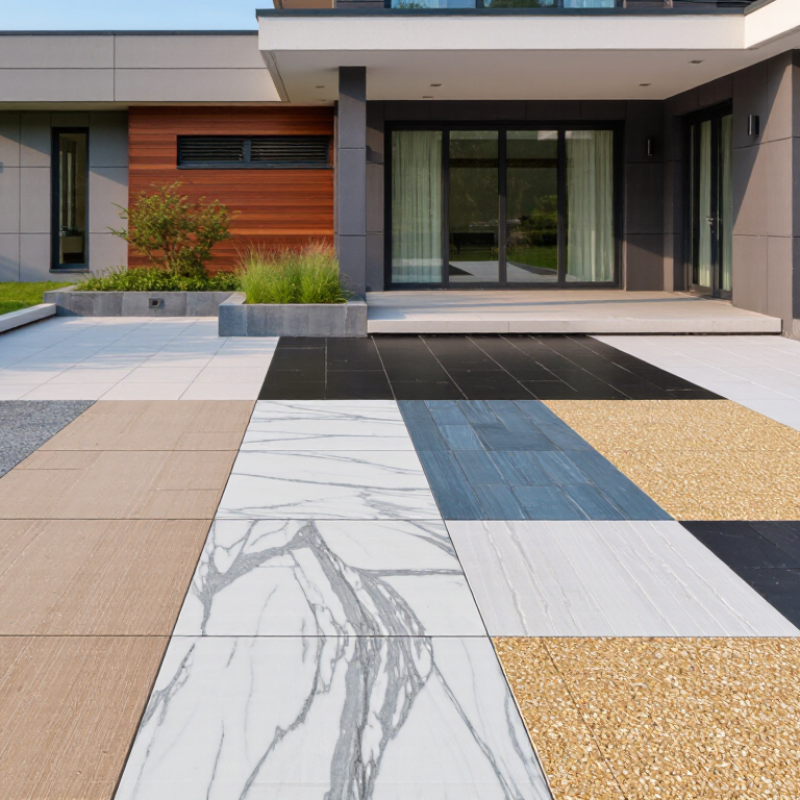
China Top 10 Patio Stones: How to Choose the Right One?
Types of Patio Stones Commonly Available from China
Chinese suppliers commonly provide granite, limestone, sandstone, slate, basalt, quartzite, travertine, marble, porphyry, and cobblestone. Each stone behaves differently outdoors. Granite is dense and dependable for busy patios. Limestone offers soft colors, but some varieties absorb more water. Sandstone creates a warm, natural surface and may need regular sealing. Slate adds layered texture, although uneven pieces can make furniture wobble.
Basalt has a dark, modern appearance and strong wear resistance. Quartzite is hard and often handles heavy foot traffic well. Travertine brings small pores and a weathered character. Marble looks refined, but polished surfaces can become slippery when wet. Porphyry provides varied colors and rough edges. Cobblestone works well for borders, paths, and traditional layouts.
Do not choose by color alone. Ask for the stone’s absorption rate, thickness, slip resistance, and test results. A 20–30 mm slab may suit many residential patios, but local soil and climate still matter. Check for freeze-thaw performance in cold regions. Inspect a full sample under sunlight and after wetting it.
Small details matter.
I once saw a pale stone appear uniform in a showroom, yet installed pieces showed strong shade variation. That was not a defect, but the expectation was unclear. Confirm batch consistency, edge finishing, crate protection, and replacement availability before ordering. A textured finish usually offers safer footing than a polished one. Even experienced buyers can overlook drainage. Water should move away from the house, not collect beneath the stones.
Types of patio stones commonly available from China are compared by representative typical compressive strength. Higher values generally indicate better resistance to heavy traffic and mechanical wear, while climate, water absorption, surface finish, and installation quality must also be considered.
The figures are representative midpoint values for commonly traded natural-stone categories and are provided for preliminary selection only. Actual performance varies by quarry, grade, thickness, and processing method. Request current laboratory test data before purchasing.
The top ten patio stone options differ in strength, texture, drainage, and maintenance. Granite handles heavy furniture, frost, and frequent foot traffic with little movement. Bluestone offers rich blue-gray tones, but its dark surface can become hot in direct sunlight. Limestone feels smooth and natural, although softer grades may scratch or absorb stains. Sandstone creates warm, earthy colors, yet uneven quality can cause faster weathering. Slate provides layered texture and strong visual contrast, but some pieces may split along natural lines.
Travertine stays relatively cool under sunlight because of its porous surface. It needs careful sealing and regular cleaning. Quartzite is very hard and resists abrasion, though cutting it requires experienced installers. Concrete pavers provide consistent sizes and flexible patterns, but color may fade over time. Porcelain pavers resist stains, moisture, and frost, while their thin edges can chip during poor handling. River rock creates a rounded, informal surface, but walking comfort and furniture stability can be limited.
In my project experience, drainage often matters more than appearance. A beautiful stone can fail on a weak base. Check local freeze-thaw conditions, water absorption, and slip resistance before choosing. Request samples and wet them, because some colors change dramatically. I once underestimated afternoon heat on dark paving. It looked excellent, but bare feet disagreed. Budget calculations can also miss cutting waste, edge restraints, and replacement pieces. A slightly imperfect sample may reveal real-world behavior better than a polished showroom display.
Patio stones should respond to local weather, not only visual preference. In humid regions, choose dense granite, basalt, or quartzite with low water absorption. These stones resist moss better when the surface drains quickly. Sandstone can work well, but porous varieties may darken after repeated rain. I have seen beautiful samples fail when installed over compacted soil without proper drainage.
Freeze-thaw climates require special care. Water trapped inside a stone can expand, causing cracks during winter. Select frost-resistant materials and ask for verified absorption and strength data. A slightly textured finish improves grip around pools and rainy entrances. Polished surfaces look refined, but they can become slippery under wet shoes. This is easy to underestimate.
Hot, sunny patios need stones that tolerate thermal movement. Light-colored limestone and travertine usually feel cooler underfoot than dark basalt. However, softer stones can scratch under outdoor furniture. For dining areas, thicker granite or quartzite often handles dragging chairs and dropped cookware better. Check the stone’s thickness, edge finish, and installation method together. A strong stone can still fail on an unstable base. I once preferred appearance over maintenance and regretted it after the first wet season. Use local climate records, drainage conditions, and actual outdoor habits before making the final choice.
China Top 10 Patio Stones: How to Choose the Right One?
When comparing China’s top patio stones, quality starts with measurable details. Check thickness, edge accuracy, water absorption, and freeze-thaw performance. Granite and quartzite usually resist scratches well. Limestone and sandstone offer softer, warmer textures. Porcelain provides consistent sizing and low absorption. Ask for recent test reports, not only attractive sample photos. Place samples outdoors and inspect them after rain, dust, and direct sunlight.
Safety deserves equal attention. A polished surface may become slippery near a pool or outdoor kitchen. Choose a textured finish and request slip-resistance data for wet conditions. Check whether the stone has sharp edges, unstable layers, or color treatments that may fade. I once approved a pale sample too quickly. It looked elegant indoors, but outdoor dirt made the surface difficult to keep clean.
Cost includes more than the purchase price. Compare packaging, transport, breakage allowance, installation waste, sealing, and future repairs. Dense stones may cost more initially, yet they can reduce maintenance. Porous stones often need regular sealing, while porcelain usually needs simple sweeping and washing. Still, low maintenance is not maintenance-free. A stiff brush can damage some finishes, and strong cleaners may leave pale marks. Request a maintenance guide and test cleaning on a spare piece. Check carefully. Mistakes are expensive.
China Top 10 Patio Stones: How to Choose the Right One?
Start with the site. Measure twice. Record sunlight, rainfall, slope, soil movement, and expected foot traffic. The 2025 U.S. Geological Survey Mineral Commodity Summaries estimated U.S. crushed-stone output at about 1.5 billion metric tons in 2024. This large construction market shows why grading, strength, and supply consistency matter. For Chinese patio projects, compare granite, basalt, sandstone, slate, limestone, quartzite, travertine, and concrete pavers by performance, not appearance alone.
Check water absorption and slip resistance before color. Dense granite and basalt usually suit wet, high-traffic areas. Sandstone can feel warmer, but softer varieties may weather faster. In freeze-prone regions, ask for freeze-thaw test results and install a proper drainage layer. ASTM C1782 provides testing guidance for concrete paving units, while natural-stone projects should request documented absorption, flexural strength, and slip data. Use a 300-millimeter sample outdoors for several days. Color changes under rain.
Price can mislead. A cheaper stone may need thicker bedding, sealing, or earlier replacement. Ask for quarry location, batch consistency, thickness tolerance, and replacement availability. My checklist is not perfect. Local soil can defeat a beautiful specification. Leave room for drainage, expansion, and honest maintenance time. Water changes everything.
| Rank | Patio Material | Typical Formats | Typical Water Absorption | Durability | Slip-Resistance Guidance | Maintenance | Typical Installed Cost* | Best For |
|---|---|---|---|---|---|---|---|---|
| 1 | Porcelain Pavers | 600×600 mm; 600×1200 mm; 20 mm thickness | ≤0.5% for porcelain tile products meeting low-absorption standards | Very high; resists staining, frost and fading when correctly installed | Select a textured outdoor surface; polished finishes are unsuitable when wet | Low; sweep and wash periodically | US$35–80/m² | Modern patios, pool surrounds and low-maintenance projects |
| 2 | Granite | 300×300 mm to 600×600 mm; irregular slabs | Approximately 0.2–1.5%, depending on the stone | Very high; dense and highly resistant to abrasion | Flamed, bush-hammered or naturally cleft surfaces provide better grip | Low to medium; resealing may be useful in heavily stained areas | US$45–100/m² | High-traffic patios, steps and cold or wet climates |
| 3 | Quartzite | 300×600 mm; 600×600 mm; natural-cut slabs | Generally below 1–3%, varying by geological source | Very high; hard, dense and resistant to scratching | Choose a cleft or textured finish rather than a polished surface | Medium; periodic sealing helps reduce staining | US$50–110/m² | Premium outdoor areas requiring strong natural stone |
| 4 | Bluestone | 300×600 mm; 600×600 mm; irregular flagstone | Approximately 1–5%, depending on composition and finish | High; suitable for regular foot traffic | Natural cleft or thermal-textured finishes improve wet traction | Medium; sealing can help prevent oil and food stains | US$40–90/m² | Contemporary patios and formal garden layouts |
| 5 | Concrete Pavers | 100×200 mm; 300×300 mm; 400×400 mm; modular sets | Approximately 5–10% for common outdoor paving products | High; replaceable units tolerate heavy use | Use textured or brushed surfaces and avoid highly smooth finishes | Low to medium; joint sand may need replenishment | US$25–60/m² | Cost-controlled projects, driveways and large patios |
| 6 | Sandstone | 300×600 mm; 600×600 mm; irregular flagstone | Approximately 1–10%, depending on mineral structure | Medium to high; select dense grades for freeze-thaw climates | Naturally textured and usually comfortable underfoot | Medium to high; cleaning and periodic sealing are recommended | US$25–65/m² | Rustic gardens, outdoor dining areas and warm-climate patios |
| 7 | Limestone | 300×600 mm; 600×600 mm; sawn or tumbled slabs | Approximately 1–12%, depending on density and porosity | Medium; can weather or etch under acidic conditions | Brushed, sandblasted or naturally textured finishes are preferred | Medium to high; reseal and avoid acidic cleaners | US$30–75/m² | Light-colored patios and designs with a soft, natural appearance |
| 8 | Slate | 300×600 mm; 600×600 mm; irregular cleft slabs | Approximately 0.5–5%, depending on type and lamination | Medium to high; quality varies significantly by source | Natural cleft surfaces offer useful traction but may be uneven | Medium; sealing helps protect color and reduce flaking | US$30–70/m² | Textured contemporary patios and sheltered outdoor spaces |
| 9 | Travertine | 300×600 mm; 400×600 mm; modular patterns | Approximately 0.5–3% when filled and properly finished | Medium to high; softer and more porous than granite | Tumbled, brushed or honed-matte finishes are suitable for wet areas | Medium; fill voids as needed and reseal periodically | US$35–85/m² | Pool decks and patios where thermal comfort is important |
| 10 | Brick Pavers | 100×200 mm; 200×200 mm; herringbone modules | Approximately 6–12%, depending on firing and product standard | High; individual units are easy to replace | Textured face and multiple joints provide good walking traction | Low to medium; remove moss and renew joint material when required | US$25–65/m² | Traditional courtyards, pathways and patterned patios |
*Installed cost is an indicative range in US dollars per square metre and may vary with material grade, thickness, surface finish, site preparation, transport, labor and local market conditions. Water-absorption values are typical ranges; always verify the technical data for the specific product.
Granite is strong, stable, and resistant to frost. It suits busy patios with heavy tables and chairs. A strong base still matters.
Travertine usually feels cooler because its porous surface holds less heat. Dark blue-gray stone may become uncomfortable under afternoon sun.
Sandstone offers warm, earthy colors and a natural texture. Softer grades may scratch, absorb stains, or weather quickly. Quality varies.
Request freeze-thaw results and water absorption data. Use proper drainage layers and stable bedding. Poor drainage can damage attractive stone.
Place a 300-millimeter sample outdoors for several days. Wet it and observe color changes, texture, and slipping. Showroom lighting can mislead.
Porcelain resists stains, moisture, and frost. Its thin edges may chip during careless handling. Transport and installation need attention.
Concrete pavers offer consistent sizes and many laying patterns. Their color may fade over time. Replacement pieces should be stored.
Include cutting waste, edge restraints, drainage, sealing, and replacement pieces. Cheaper stone may need more bedding or earlier repairs. My checklist is not perfect.
River rock creates a rounded, informal surface. Walking may feel uneven, and furniture can wobble. It needs careful placement.
Performance should come before color. Check strength, absorption, slip resistance, slope, and expected foot traffic. Water changes everything.
Choosing among China’s top 10 patio stones begins with understanding the options available, including natural stone, porcelain, granite, limestone, sandstone, slate, travertine, basalt, quartzite, and engineered paving materials. Each type differs in color, texture, strength, water absorption, slip resistance, installation needs, and long-term maintenance. To determine how to choose stone for patio design, consider the local climate, expected foot traffic, drainage conditions, exposure to sunlight, and the overall style of the outdoor space. A stone suitable for a dry, sunny region may not perform equally well in a wet or freezing environment.
A practical selection process should compare quality, safety, cost, appearance, durability, and upkeep rather than focusing only on the initial price. Check thickness, surface consistency, edge quality, packaging, and test information when evaluating suppliers. Then match the stone’s performance with your budget and maintenance expectations, request samples, and review installation requirements before making a final decision. The right patio stone should provide reliable performance, comfortable use, visual harmony, and lasting value for the intended outdoor application.

Tranquix Stone