When investing in stone furniture, knowing how to protect stone furniture from weather damage is essential. Different weather conditions can wear down your stone pieces, leading to unsightly stains and structural issues. Rain, snow, and even harsh sunlight can cause fading and cracking if furniture is not adequately protected.
There are several strategies to keep your stone furniture looking pristine. Utilizing protective sealants can create a barrier against moisture and dirt. Additionally, considering proper placement can minimize exposure to the elements. However, many owners overlook minor details like regular cleaning, which can make a significant difference over time.
It's important to recognize your furniture's limitations. Despite stone's durability, it requires care and maintenance. Small cracks can turn into larger problems if not addressed promptly. By being proactive, you can enjoy your stone furniture for years, without the worry of weather-related damage.
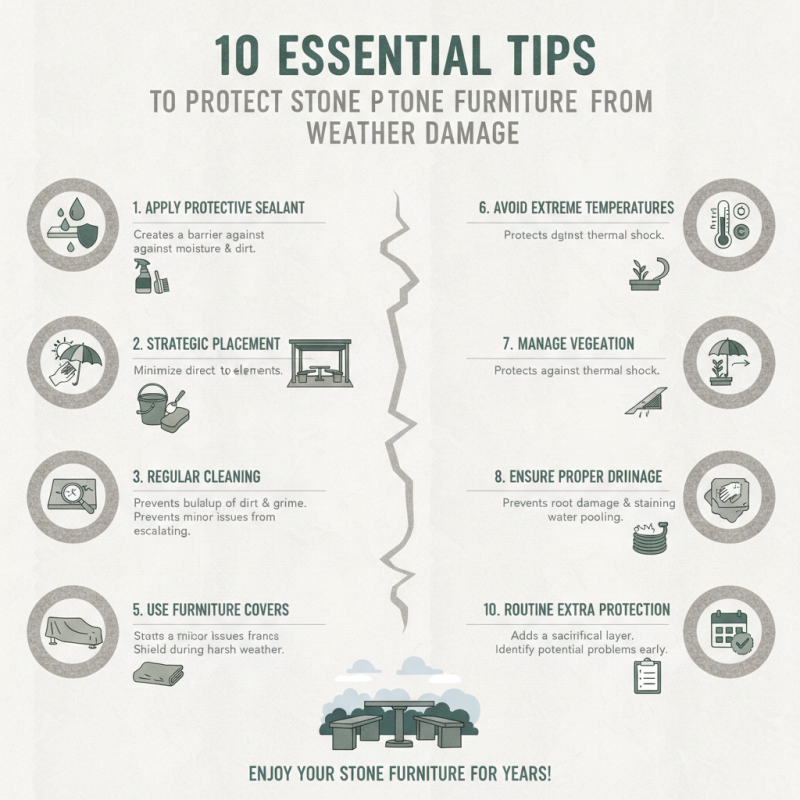
Weather can have a significant impact on stone furniture. Rain, snow, and UV rays can cause erosion, discoloration, and structural damage. Understanding these risks is crucial for keeping your stone furniture in good shape.
To mitigate weather effects, regular cleaning is essential. Removing dirt and debris helps prevent stains and surface degradation. Using a soft brush and mild detergent keeps the stone's natural appearance intact. Applying a sealer can also add a protective layer against moisture. Consider reapplying it annually to maintain effectiveness.
Another tip is to use covers during extreme weather. When storms are forecast, covering your furniture can prevent water accumulation and ice formation. This simple action acts as a barrier against harsh weather. Be mindful of humidity levels as well; excessive moisture can lead to mold growth. Overall, paying attention to these details enhances the longevity of your stone pieces.
Choosing the right location for your stone furniture is crucial for its longevity. Ideally, select a spot with good drainage and minimal exposure to direct sunlight. Too much sun can cause fading and cracks over time. Sheltered areas help protect against rain and snow. Consider placing your furniture under a large tree or awning. Such locations provide natural shade and shield against harsh weather.
Wind can also be a threat. Place stone furniture in a sheltered part of your yard. Avoid open areas where strong gusts can cause damage. Also, be aware of nearby trees. Falling branches can create severe dents or even breakage. Ensure proper spacing between furniture and landscaping to prevent accidents.
Monitoring the surrounding environment is essential. Watch how sunlight and rain change throughout the seasons. Adjust the placement if necessary. It's about finding that perfect harmony. Sometimes, you might have to move the furniture more than once. Accepting this can lead to better protection. Each decision shapes the future of your stone pieces.
This chart displays the importance level of various tips to protect stone furniture from weather damage, measured on a scale from 1 to 10. Proper location and weatherproof coatings are crucial for durability.
Protecting stone furniture from weather damage is essential for its longevity. One effective method is applying protective sealants. These sealants act as a barrier against moisture, stains, and UV rays. By enhancing the furniture's durability, they help maintain its appearance and structural integrity.
When selecting a sealant, choose one specifically designed for stone. Test it on a small area first. This step ensures compatibility and prevents unwanted discoloration. Apply the sealant evenly using a soft cloth or brush. Allow sufficient drying time before exposing the furniture to rain or extreme sunlight.
Regular maintenance is also crucial. Reapply the sealant as needed, especially after heavy rainfall. This practice keeps the protective layer intact. Additionally, consider moving your stone furniture indoors during severe weather. It’s not always practical, yet it offers the best protection. Monitor your furniture for signs of weather wear and address them promptly. Such diligence can extend the life of your stone pieces significantly.
| Tip Number | Tip Description | Recommended Sealant Type | Application Frequency |
|---|---|---|---|
| 1 | Clean the surface thoroughly before application. | Water-based sealant | Every 6 months |
| 2 | Apply sealant in dry, warm conditions. | Solvent-based sealant | Annual |
| 3 | Use a sealant specifically designed for stone. | Natural stone sealant | Every 1-2 years |
| 4 | Test sealant on a small area first. | -Pick your choice of sealant | As needed |
| 5 | Reapply after severe weather conditions. | High-performance sealant | After extreme weather |
| 6 | Avoid using harsh chemicals for cleaning. | Gentle stone cleaner | As needed |
| 7 | Protect against freezing temperatures. | Freeze-resistant sealant | Prior to winter |
| 8 | Keep heavy objects off the stone furniture. | N/A | Constant |
| 9 | Use coasters or mats to prevent stains. | N/A | Always |
| 10 | Regularly inspect for cracks or damage. | Repair sealant | Monthly |
Stone furniture can enhance outdoor spaces beautifully, but it needs protection from harsh weather. Using covers and tarps is a practical solution. Studies indicate that over 70% of outdoor furniture damage is related to weather exposure. Moisture can penetrate stone surfaces, leading to irreversible damage like cracking or color fading.
When selecting protective covers, opt for breathable materials that prevent moisture build-up. Tarps can provide additional security against UV rays and heavy rain. A survey by the Outdoor Industry Association revealed that nearly 65% of owners neglect to protect their outdoor furniture, increasing risks significantly. This oversight can lead to costly repairs or the need for replacements.
Covering furniture is not just a recommendation; it’s essential for preserving your investment. Be aware, though, that not all covers fit perfectly. Gaps can allow water and dirt to enter. Regularly check the condition of your covers and furniture to avoid potential issues. While these protective measures may seem inconvenient, safeguarding your stone furniture ensures its longevity and beauty through seasonal changes.
To preserve stone furniture effectively, regular maintenance is key. One essential practice is to clean the surfaces routinely. Use a gentle stone cleaner and soft cloth. This prevents dirt accumulation and minimizes the risk of scratches. Each season brings its unique challenges, so adapt your cleaning schedule to the weather conditions.
Sealing your stone furniture is another crucial step. A good sealer protects from moisture and stains. Apply it at least once a year, especially before winter. Regular inspections are also vital. Look for cracks or discoloration. Addressing these issues promptly can save you from costly repairs later.
Lastly, consider the placement of your stone furniture. Positioning it in a shaded area can help reduce sun damage. Even small adjustments can make a significant difference.
: Weather elements like rain, snow, and UV rays can cause erosion, discoloration, and damage to stone furniture.
Regular cleaning is key. Use a soft brush and mild detergent to remove dirt and stains effectively.
A sealer adds protection against moisture and UV damage, enhancing durability and maintaining appearance.
Reapply the sealant annually or after heavy rain to keep the protective layer intact.
Choose a spot with good drainage, minimal sun exposure, and shelter from strong winds and falling branches.
Excess moisture can lead to mold growth, affecting the furniture's appearance and integrity.
Yes, covering it during storms can prevent water accumulation and ice formation, offering additional protection.
Sometimes, adjusting the placement is needed based on changing weather patterns. It's crucial for better protection.
Test the sealant on a small area first, ensuring compatibility. Apply evenly and monitor for discoloration.
Look for fading, stains, or surface degradation. Prompt attention can extend the life of the pieces.
When considering how to protect stone furniture from weather damage, it's crucial to understand the various impacts that weather conditions can have on these durable yet vulnerable pieces. Factors such as humidity, rain, and temperature fluctuations can lead to staining, cracking, and overall degradation over time. Therefore, choosing the right location for your stone furniture, preferably an area shielded from harsh elements, is essential for its longevity.
In addition to placement, applying protective sealants can significantly enhance the durability of the stone, making it more resistant to moisture and stains. Using covers and tarps during extreme weather events provides added protection, while regular maintenance practices—such as cleaning and inspecting for damage—can help preserve the furniture's aesthetic appeal and structural integrity. By implementing these strategies, you can effectively safeguard your stone furniture against the unpredictability of the elements.

Tranquix Stone